A Hydrogen Supercar in a World Without Hydrogen Stations
The Hyundai N Vision 74 represents automotive industry's boldest gamble: a 670-horsepower hydrogen-electric hybrid supercar launching into a market with only 52 hydrogen stations nationwide. After years of will-they-won't-they speculation, production is confirmed for 100-200 units before 2030—but whether it retains its revolutionary fuel cell system or converts to pure EV remains unclear. Expected pricing: $160,000-$366,000.
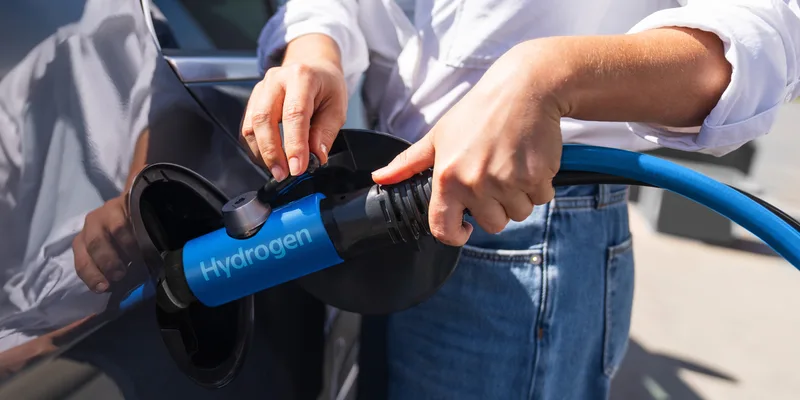
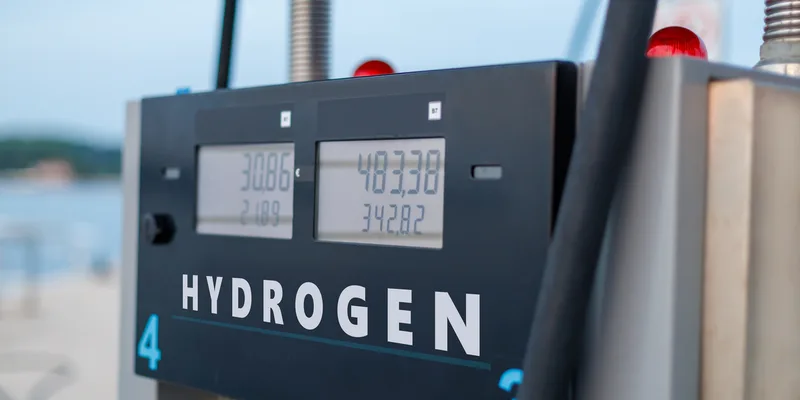
Before diving into the specifications of this stunning machine, it's worth understanding the challenging reality facing hydrogen vehicles. With only 52 operational hydrogen stations in the United States, even ultra-wealthy buyers will face significant infrastructure challenges.
The Hybrid Powertrain: How Hydrogen Meets Electric Performance
Dual Power Source Architecture
- 62.4 kWh battery pack: T-shaped, mounted low between seats
- 85 kW hydrogen fuel cell: 95 kW max output, from Hyundai Nexo
- Dual permanent-magnet AC motors: 335 hp each on rear axle
- 800V fast-charging capability
- Combined output: 670 hp (500 kW) and 664 lb-ft (900 Nm) torque
Hydrogen Storage
- Twin tanks holding 4.2 kg at 700 bar pressure
- Ballistic carbon fiber construction (bulletproof material)
- Front-mounted fuel cell system
- 5-minute refueling time
How Power Distribution Works
- City/highway cruising: 85 kW fuel cell provides all power needed for two rear motors
- Track/high-load conditions: Battery provides bulk of power, fuel cell acts as range extender
- Dynamic management: Integrated control system optimally distributes power
- Battery recharging: Fuel cell replenishes battery during lower-demand periods
Refueling and Charging
- Hydrogen: 5 minutes for full fill (at operational hydrogen fuel stations)
- Battery: 18 minutes (10-80%) via 800V fast charging
- Total driving range: 372+ miles (599 km) WLTP cycle
Performance Figures: Supercar Territory
Concept Specifications
- Combined power: 670 hp / 664 lb-ft torque
- 0-60 mph: 4.0 seconds (Hyundai official) / 3.5 seconds (Car & Driver estimate)
- Quarter-mile: 11.3 seconds (C/D estimate)
- Top speed: 155+ mph (over 250 km/h)
- Weight: ~4,400 lbs (2,500 kg) - heavy but well-managed
Real-World Test Drive Impressions (Bilster Berg, Germany, Sept 2022)
"Fast enough to pin you back in the seat, responsive enough to have you laughing out loud. Doesn't feel like 2,500 kg... tech can make kilos temporarily evaporate. Beautifully progressive brakes, plenty of steering feedback." —Top Gear
Three Independent Cooling Systems Enable Sustained Track Performance
The N Vision 74's innovation lies in its triple cooling system:
- Battery cooling: Air and water-cooled system for optimal temperature
- Fuel cell stack cooling: Dedicated circuit for stack thermal control
- Motor cooling: Separate system for dual e-motors
Why this matters: Battery EVs suffer rapid power degradation on track due to heat buildup. The N Vision 74's triple cooling system prevents thermal throttling, enabling sustained performance. Designed to complete full Nürburgring Nordschleife lap without overheating or power reduction.
Design History: Resurrecting a 1974 Legend
The Giorgetto Giugiaro Connection
The N Vision 74 pays homage to the 1974 Hyundai Pony Coupe concept, designed by legendary Giorgetto Giugiaro (also created BMW M1, Lotus Esprit, DeLorean DMC-12, VW Golf Mk1). The original Pony Coupe debuted as a static show car at the 1974 Turin Motor Show but never reached production due to lack of suitable engine.
Development Timeline
- 2016: Chief designer SangYup Lee began sketching concepts
- July 2022: Unveiled at N Day 2022 in Busan, South Korea
- September 2022: Press drive event at Bilster Berg track, Germany
- February 2025: Production version teased in documentary trailer
Styling Cues That Broke the Internet
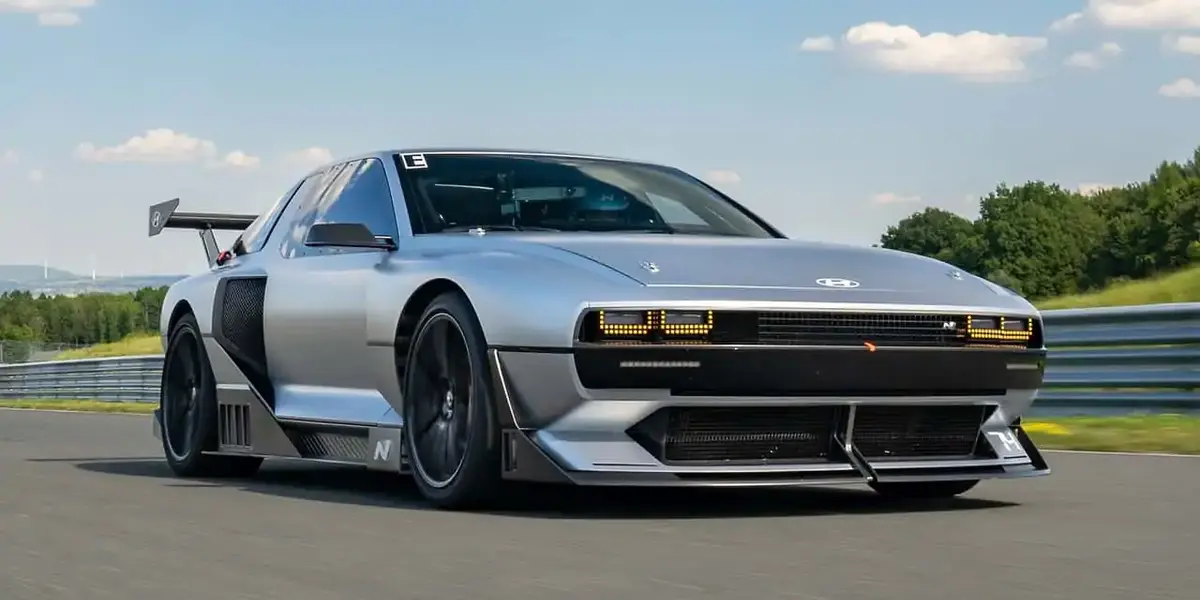
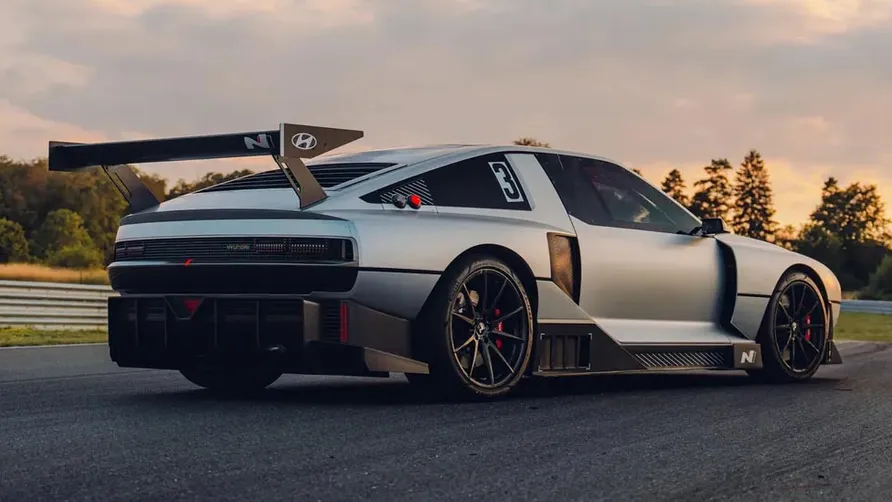
- Wedge-shaped profile with sharp, angular lines
- Rectangular headlamps and taillights with "Parametric Pixel" LED design
- Massive side air intakes for cooling three independent systems
- Prominent rear wing for downforce and aerodynamics
- Slatted rear deck covering hydrogen tanks
- 20-inch front (270/35R20 Pirelli P Zero), 21-inch rear (315/30R21)
Production Status: Confirmed but Timeline Uncertain
The Roller Coaster Announcement History
- December 2023: Initial production confirmation—100-200 units starting 2026
- August 2024: Officially confirmed at CEO Investor Day as part of 21 EVs by 2030
- September 2024: Reports of cancellation due to "unknown reasons"
- February 2025: RE-CONFIRMED—Teased production-spec version in documentary
Current Status (November 2025)
- Production confirmed: Listed among "high-performance EVs" in Hyundai's 21-model plan through 2030
- Timeline: Before 2030 confirmed; June 2026 target reported but uncertain
- Volume: 100 units annually for 2 years (200 total) most likely
- R&D status: Underway at Namyang development center
The Billion-Dollar Question: Hydrogen or Pure EV?
Arguments for Keeping Hydrogen Fuel Cell
- Hyundai's stated commitment to showcasing hydrogen technology
- Only 100-200 units = manageable infrastructure requirements for wealthy buyers
- Fits "Rolling Lab" purpose to test fuel cell in performance application
- Would be world's first hydrogen-electric supercar
- Unique selling proposition vs. battery EV competitors
Arguments for Switching to Pure EV
- Severe infrastructure reality (only 52 US stations, mostly California)
- Higher hydrogen fuel costs ($36/kg)
- Battery EVs proven more practical (Ioniq 5 N success with 641 hp)
- Removes geographic sales restrictions
- Ioniq 5/6 N powertrain already developed and proven
Industry speculation: Many experts believe production version will use pure EV powertrain from Ioniq 5/6 N rather than hydrogen hybrid, despite concept's fuel cell showcase purpose. This would make business sense but lose the unique technology story.
Expected Pricing: Ultra-Exclusive Territory
Wide Range of Predictions
- Motor Trend estimate: $160,000 base (2023)
- Korean media reports: 300-500 million won ($205,000-$366,000)
- Most realistic range: $160,000-$300,000+ depending on specification
Context: Would be most expensive Hyundai ever produced, surpassing Genesis G90 long-wheelbase (~$125,000). Pricing depends heavily on whether it retains hydrogen system (more expensive, more exclusive) or converts to EV (potentially more accessible).
Comparison to Other Performance Cars
- Tesla Model S Plaid: 1,020 hp, 0-60 in 1.99 sec, $108,000
- Porsche 911 Turbo: 640 hp, 0-60 in 2.6 sec, $177,000+
- BMW M4 Competition: 503 hp, 0-60 in 3.4 sec, $78,000
- Acura NSX Type S: 600 hp (hybrid), $169,500
Final Assessment: A Beautiful Technological Showcase
Production Status Summary (November 2025)
- ✅ Confirmed: Production happening before 2030
- ❓ Uncertain: Exact timeline (2026? 2027? Before 2030?)
- ❓ Unknown: Hydrogen fuel cell or pure EV powertrain
- 💰 Pricing: $160,000-$366,000 estimated
- 🔢 Volume: 100-200 units most likely
- 🌍 Markets: Global but California-focused if hydrogen
Will It Succeed?
As a collector's item and brand builder: Absolutely yes. The design is stunning, the technology fascinating, and ultra-limited production ensures sellout and long-term collector value.
As a practical hydrogen performance car: Faces significant challenges. With only 52 hydrogen stations in the US (96% in California), current high fuel costs ($36/kg), and limited infrastructure expansion, practical daily use would be primarily limited to California. The vehicle would serve more as a technological showcase than a mainstream performance option for most buyers.
The bottom line: The N Vision 74 represents an exceptionally beautiful and technologically advanced hydrogen-powered performance car concept. It showcases what hydrogen technology can achieve in a high-performance application, even as the broader hydrogen passenger vehicle market faces significant adoption challenges.
Whether it arrives with its revolutionary fuel cell system or converts to pure EV, it will be a stunning halo car that elevates Hyundai's brand from value to performance credibility. Buyers should carefully consider infrastructure availability in their area if the hydrogen powertrain is retained. For a comprehensive comparison of hydrogen versus electric technology, see our detailed analysis.
The N Vision 74 represents Hyundai's ambitious vision for high-performance hydrogen technology, showcasing engineering excellence even as the broader hydrogen passenger market continues to face adoption challenges.
Could You Actually Fuel the N Vision 74?
Use our free hydrogen fuel station locator to see if you could even fuel this hydrogen supercar in your area.
Check Hydrogen Station Availability