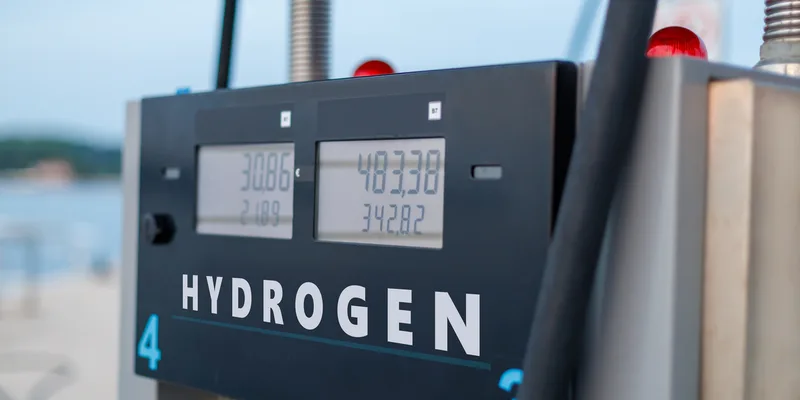
The hydrogen fuel cell vehicle promised a gasoline-like experience with zero emissions. Fast refueling in five minutes, 400-mile ranges, and only water vapor from the tailpipe. Meanwhile, battery electric vehicles have quietly built a 204,000-station charging network, dropped costs dramatically, and captured nearly all zero-emission vehicle sales. In 2024, Americans bought over 1.3 million EVs but only 322 hydrogen vehicles—a telling 4,000-to-1 ratio.
This comparison cuts through the hype to examine what actually matters: Which technology fits your life, your budget, and your values in 2025? The answer depends less on which technology sounds more impressive and more on where you live, how you drive, and what you're willing to pay.
How These Zero-Emission Technologies Actually Work
Battery electric vehicles and hydrogen fuel cell vehicles both use electric motors to drive the wheels, delivering instant torque and smooth acceleration. But they generate and store that electricity in fundamentally different ways, creating cascading differences in efficiency, cost, and practicality.
Electric Vehicles: Elegantly Straightforward
A large lithium-ion battery pack—typically 60-80 kilowatt-hours—stores electricity from the grid. An inverter converts this direct current to alternating current for the electric motor, which turns at up to 15,000 RPM to propel the car. When you brake, the motor reverses roles, becoming a generator that captures kinetic energy and returns it to the battery. This regenerative braking can extend range by 30% in city driving.
The system achieves remarkable efficiency. Over 90% of the electrical energy from the battery reaches the wheels, compared to just 20-30% efficiency for gasoline engines. Modern battery packs deliver up to 361 miles of range, with real-world performance typically matching 85-90% of EPA estimates.
Hydrogen Fuel Cell Vehicles: Electrochemistry, Not Combustion
High-pressure tanks store compressed hydrogen gas at an extraordinary 10,000 pounds per square inch—enough pressure to launch a hydrogen atom through a brick wall if suddenly released. The Toyota Mirai stores 5.6 kilograms of hydrogen across three tanks, while the Hyundai Nexo holds 6.3 kilograms.
Inside the fuel cell stack, hydrogen passes through a proton exchange membrane while oxygen from ambient air flows through the cathode. A platinum catalyst splits hydrogen molecules into protons and electrons. The electrons flow through an external circuit, creating electricity to power the motor. The protons pass through the membrane to combine with oxygen, producing only water vapor and heat.
The fuel cell itself operates at about 60% efficiency, but the complete energy chain tells a different story. Producing hydrogen from natural gas, compressing it to 10,000 PSI, transporting it to stations, and converting it back to electricity delivers just 25-35% well-to-wheel efficiency. That's one-third the efficiency of charging a battery directly. For details on available hydrogen vehicles, see our complete buyer's guide.
Refueling Speed Versus Everyday Convenience
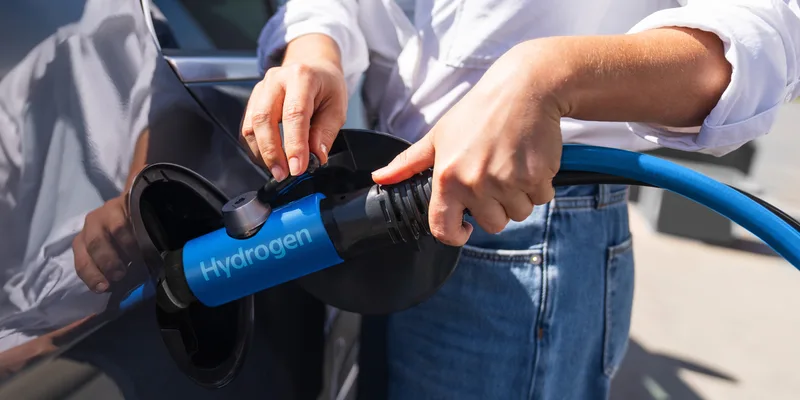
Hydrogen vehicles win the stopwatch test decisively. Filling a Mirai's tank takes roughly five minutes, matching the gasoline experience. An EV requires 30-45 minutes at a DC fast charger to reach 80% capacity, and 4-10 hours on a home Level 2 charger. On paper, hydrogen eliminates range anxiety with gas-station-speed refueling.
But convenience extends beyond stopwatch speed to encompass the complete refueling experience.
Finding Available Hydrogen Proves Difficult
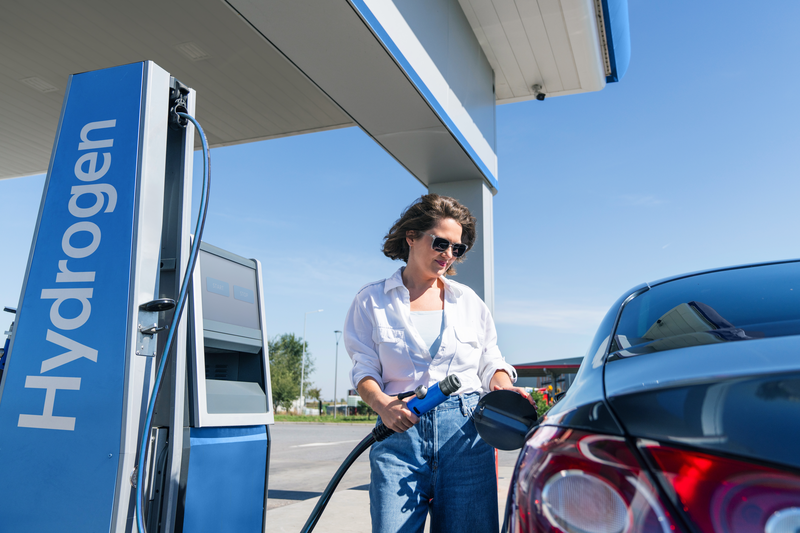
Of 54 retail hydrogen stations nationwide, 48 cluster in California. Even within California, station reliability remains poor. On a typical day in 2024, roughly one-quarter of stations were offline due to equipment failures, maintenance, or hydrogen supply disruptions.
A September 2023 supply crisis knocked nearly half of California's stations offline simultaneously, with some remaining closed for months. Shell permanently closed all seven of its California passenger car stations in February 2024, representing a 13% overnight reduction. Learn more about the current hydrogen infrastructure crisis.
EV Charging Infrastructure: Ubiquitous but Slower
The United States now has 204,000 public charging stations, a number growing 25% annually. More importantly, any home with a 240-volt outlet becomes a personal charging station. About 80% of EV charging happens at home, where drivers plug in overnight and wake to a full charge each morning.
Road trips require planning around DC fast charging stops, adding 30-40 minutes every 200-250 miles. But for the 96% of daily driving under 100 miles, home charging eliminates fuel stops entirely. You never visit a charging station for routine driving. This inverts the refueling paradigm: EVs prove more convenient for daily use, while hydrogen offers faster refueling for the minority of driving that's long-distance.
The Cost Equation That Changes Everything
Purchase prices for hydrogen vehicles and EVs have converged in the $40,000-70,000 range, but total cost of ownership reveals a significant difference in operating costs. The ongoing fuel expenses—the money leaving your wallet month after month—create a $40,000 gap over six years favoring electric vehicles.
Hydrogen Fuel Costs Make Operation More Expensive Than Gas Trucks
California hydrogen prices reached $34-36 per kilogram in 2024. For context, $36/kg equals approximately $14.60 per gallon on an energy-equivalent basis. Filling a Toyota Mirai's 5.6-kilogram tank costs $175-200, providing 250-300 miles of real-world range. That's $0.60-0.67 per mile—triple the cost of operating a Ford F-150 and six times the cost of a Toyota Prius hybrid.
These prices make hydrogen the world's most expensive transportation fuel. For a detailed breakdown, see our comprehensive fuel cost analysis.
Electric Vehicles Cost 12 Times Less to Fuel
At the U.S. average residential electricity rate of 17 cents per kilowatt-hour, a typical EV consuming 30 kWh per 100 miles costs $0.03-0.05 per mile. That same 12,000 annual miles costs just $360-600 in electricity. Even California's expensive electricity delivers costs around $0.08/mile—still 87% cheaper than hydrogen.
Annual Fuel Cost Comparison (12,000 miles/year)
| Vehicle Type | Cost Per Mile | Annual Cost |
|---|---|---|
| Hydrogen FCEV | $0.67 | $7,200-8,040 |
| Gasoline (30 MPG) | $0.15 | $1,800 |
| Hybrid (44 MPG) | $0.10 | $1,227 |
| EV (home charging) | $0.05 | $360-600 |
That hydrogen vehicle costs $6,600-7,440 more in fuel annually than an EV, and $5,400-6,240 more than a gasoline vehicle. Over six years, the difference reaches $39,600-44,640 compared to EVs.
Infrastructure Availability Defines What's Actually Possible
Numbers tell the story simply: 204,000 EV charging locations versus 54 hydrogen stations. But ratios miss the geographic reality that makes hydrogen functionally impossible outside California while EVs work nationwide.
Hydrogen Infrastructure Exists in One State Plus Two Lonely Outposts
California's 48 stations concentrate in the Bay Area and greater Los Angeles, with Sacramento down to a single operational station. Hawaii has one station in Honolulu. Washington operates one station in East Wenatchee. The other 47 states have exactly zero public hydrogen infrastructure.
Even within California, the network barely functions. Station reliability averages just 62%—meaning stations successfully dispense fuel only about two-thirds of the time customers attempt to refuel. Use our hydrogen fuel station locator to see the limited network for yourself.
EV Charging Infrastructure Blankets the Country
The 204,000 public charging locations include 51,000 DC fast chargers—stations that can add 150-200 miles of range in 20-30 minutes. These stations concentrate along major highways, at shopping centers, workplaces, and restaurants. California alone has 54,000 charging ports, more than 1,000 times the number of hydrogen nozzles.
The Tesla Supercharger network offers 33,400 ports exclusively for Tesla drivers. Electrify America operates 5,100 ports across 47 states. ChargePoint manages the largest Level 2 network with 44% of all U.S. Level 2 ports.
More significantly, every home becomes a charging station with a 240-volt outlet installation costing $1,000-2,500. This eliminates fuel stops for routine driving. Morning arrives with a full battery and 250-350 miles of range—enough for days or weeks of typical driving.
Infrastructure Comparison Table
| Metric | Hydrogen | EV Charging | Ratio |
|---|---|---|---|
| US Stations | 52 | 204,000 | 1:3,923 |
| California | 50 | 54,000 | 1:1,080 |
| 2024 Growth | -3 (negative) | +25% | N/A |
| Build Cost | $1.5-4M | $30K-200K | 20-100x |
Environmental Impact Depends Entirely on Hydrogen's Color
Both technologies promise zero tailpipe emissions—water vapor for hydrogen, nothing at all for EVs. But environmental impact extends from energy source through production, distribution, and use.
Hydrogen Comes in Colors That Matter Enormously
Grey hydrogen, produced by steam methane reforming of natural gas without carbon capture, represents 95% of current U.S. hydrogen production. This process releases 12-14 kilograms of CO₂ for every kilogram of hydrogen produced. Driving an FCEV on grey hydrogen produces 180-200 grams of CO₂ per kilometer—only 20-30% better than gasoline vehicles.
Blue hydrogen adds carbon capture to natural gas reforming, capturing 56-90% of CO₂. This reduces lifecycle emissions to 80-100 grams per kilometer—roughly matching an EV charged on today's average U.S. grid.
Green hydrogen, produced by electrolysis using renewable electricity, achieves near-zero production emissions. But green hydrogen currently constitutes less than 1% of U.S. production and costs $4-6 per kilogram to produce—before compression, transportation, and distribution add another $8-12/kg.
Most Hydrogen Vehicle Drivers Today Burn Fossil Fuels with Extra Steps
That's the honest assessment. The grey hydrogen powering FCEVs starts as natural gas, gets reformed in an energy-intensive process, gets compressed to 10,000 PSI consuming 10-30% of its energy content, gets trucked hundreds of miles, then finally converts to electricity at 60% efficiency. The complete process wastes roughly 70% of the natural gas's energy while producing substantial CO₂.
Battery Production Carries Environmental Costs That Don't Change the Equation
Mining lithium, cobalt, and nickel impacts water resources and ecosystems. Processing these materials into batteries generates 54-68 kg of CO₂ per kilowatt-hour of capacity. A typical 70 kWh battery pack adds roughly 4 tons of CO₂ to the vehicle's lifecycle footprint.
This matters, but context matters more. That 4-ton battery production penalty gets offset within 1-2 years of normal driving when comparing an EV to a gasoline vehicle, even on fossil-heavy grids. Hydrogen fuel cell production requires similar materials and has comparable production emissions.
The Grid Matters Enormously for EV Emissions
An EV charged on today's U.S. grid mix—about 60% fossil fuels, 40% clean energy—produces 102-120 grams of CO₂ per kilometer over its lifecycle. That's 60% less than gasoline vehicles. On California's cleaner grid, EVs drop to 70-80 grams per kilometer.
As the grid decarbonizes, EVs automatically become cleaner without changing anything. Every solar panel and wind turbine added to the grid reduces EV emissions. The U.S. grid added 90.5% renewable capacity in 2024. By 2030, renewable generation could reach 40-50%, slashing EV lifecycle emissions by an additional 30%.
Range and Performance Meet Real-World Needs Differently
Hydrogen vehicles edge EVs slightly on paper range: the Toyota Mirai claims 402 miles, the Hyundai Nexo 380 miles, while most EVs deliver 250-350 miles. In reality, both technologies meet the needs of 96% of daily driving, with differences emerging primarily for road trips and extreme conditions.
Range Anxiety Affects Both Technologies Differently
Hydrogen vehicles' longer range matters less than range confidence—knowing you can find fuel when you need it. California drivers report actual Mirai range of 250-300 miles under real-world conditions. But the critical limitation isn't tank size; it's finding an operational hydrogen fuel station.
EVs typically deliver 85-95% of EPA-rated range under normal conditions. A 300-mile EV realistically provides 255-285 miles. That's sufficient for daily driving, as 95% of car trips are under 30 miles.
Cold Weather Advantages Favor Hydrogen Modestly
EVs lose 20-40% of range in extreme cold, depending on model. Most modern EVs with heat pumps lose 24-30% at 0°F. A 300-mile EV becomes a 210-mile EV in bitter cold, which still exceeds 96% of daily driving needs but requires more frequent charging on winter road trips.
Hydrogen vehicles experience less temperature-related range loss since fuel cell operation generates heat. FCEVs maintain closer to rated range in cold weather.
Making the Decision: A Framework for Choosing
The comparison reveals that one technology dominates for passenger vehicles in 2025, while the other remains a California-exclusive curiosity with fundamental challenges.
Choose an EV If You Match Any of These Conditions
- You live anywhere except California
- You can install home charging or have workplace charging access
- You drive under 250 miles daily (99% of drivers)
- You want lower operating costs
- You prefer established technology with proven resale value
- You value convenience over refueling speed
- You want wider vehicle selection across prices and styles
Consider Hydrogen Only If ALL of These Apply
- You live in California near multiple operational hydrogen stations
- You cannot install home or workplace charging
- You regularly drive 300+ miles between refueling stops
- You qualify for manufacturer fuel credits
- You're comfortable with limited refueling options and occasional station unavailability
- You accept that resale value will be poor
- You want to support emerging technology despite practical disadvantages
The Market Has Voted Decisively
Americans bought 1.3 million EVs in 2024 versus 322 hydrogen vehicles—a 4,000-to-1 ratio. Global EV sales exceed 10 million annually while hydrogen vehicles sold fewer than 13,000 worldwide. Major automakers including Mercedes, Volkswagen, and Stellantis have abandoned hydrogen passenger cars entirely.
Infrastructure Trajectory Matters More Than Current Technology
In 2020, the U.S. had 100,000 public EV chargers; today it has 204,000, with 164,000 more announced. Hydrogen had 65 stations in 2020 and has 54 today—a net loss despite hundreds of millions in public investment. Shell exited the market. No major fuel companies are building hydrogen networks.
Conclusion: Understanding Current Market Realities
The comprehensive comparison reveals that hydrogen fuel cell vehicles face significant challenges for passenger car applications in the current market. Currently limited primarily to California, facing infrastructure constraints, and operating at higher costs than both gasoline and electric alternatives, hydrogen vehicles represent a limited market segment with substantial practical limitations.
Battery electric vehicles currently dominate the zero-emission passenger vehicle market. Broader availability across all states, 204,000 charging locations with continued growth, operating costs approximately 12 times lower than hydrogen, over 70 model choices across various segments and price points, and established infrastructure create significant practical advantages for most buyers.
The technology advantages that made hydrogen appealing—five-minute refueling and 400-mile range—are currently offset by the practical challenges of limited infrastructure, higher costs, and restricted geographic availability that characterize the electric vehicle market's established advantages.
For passenger vehicles in 2025, electric vehicles represent the more practical choice for most buyers. Hydrogen vehicles may be suitable for specific use cases in California where buyers have convenient station access and accept the current cost premium. Those interested in hydrogen technology should carefully evaluate infrastructure availability and total ownership costs.
Hydrogen technology continues to show promise in heavy-duty trucking, maritime shipping, aviation, and industrial applications where batteries face weight and range limitations. For passenger cars, current market dynamics favor electric vehicles, though hydrogen technology continues to evolve and may find future applications as infrastructure develops.
Still Considering Hydrogen? Check Station Availability First
Use our free hydrogen fuel station locator to see the limited infrastructure in your area before making any decisions.
Check Hydrogen Station Availability