Current State of U.S. Hydrogen Infrastructure
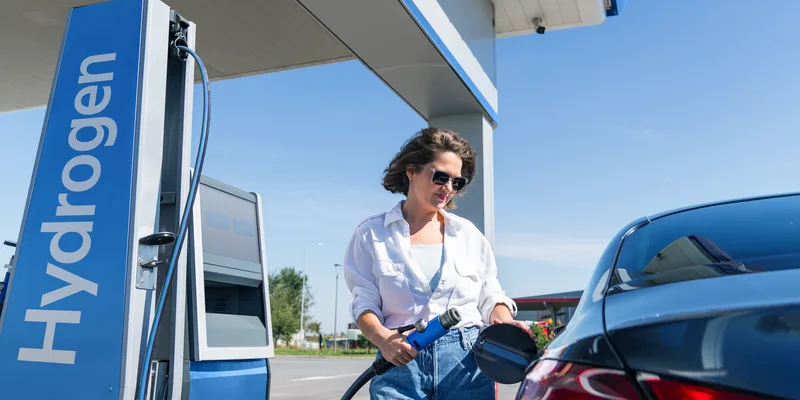
The United States hydrogen refueling network has 52 operational stations as of 2025—and it's shrinking. After Shell closed seven California stations in February 2024, the infrastructure that was supposed to revolutionize transportation is collapsing instead of expanding. California holds 50 of those 52 stations (96%), with Hawaii and Washington hosting one each. The other 47 states remain complete hydrogen deserts.
Use our hydrogen fuel station locator to check real-time availability in your area and see the limited network for yourself.
United States (2025)
- Total: 52 publicly accessible stations
- California: 50 stations (96% of US total)
- Geographic concentration: Bay Area (~17 stations), Los Angeles/San Diego (majority), Sacramento (only 1 remaining)
- Net change 2024: Lost 3 stations (12 closed, 9 opened)
International Comparison Shows US Falling Behind
- China: 384 stations (global leader, adding ~30 in 2024)
- South Korea: 198 stations (consistent 25/year growth)
- Japan: 161 stations (growth slowing, only 8 added in 2024)
- Germany: 113 stations (European leader)
- Global total: ~1,160 operational stations
EV Infrastructure Comparison
The US has 80,940 EV charging stations with 248,313 ports—1,560 times more locations than hydrogen stations. California alone has 44,000+ EV charging stations, nearly 900 times its hydrogen network. For a detailed comparison, see our hydrogen vs electric vehicles guide.
Station Reliability: Ongoing Challenges
California Fuel Cell Partnership reported in April 2024 that "a majority of hydrogen stations in Southern California are offline or operating with reduced hours." By April 2025, they noted the supply chain was "gradually improving"—a polite way of acknowledging ongoing failures.
MotorTrend's Damning Yearlong Test
During their year with a Toyota Mirai, one-third of refueling attempts failed to deliver a full tank. The H2FCP Station Map consistently shows multiple stations flagged as "temporarily unavailable."
Common Failure Modes Destroying the User Experience
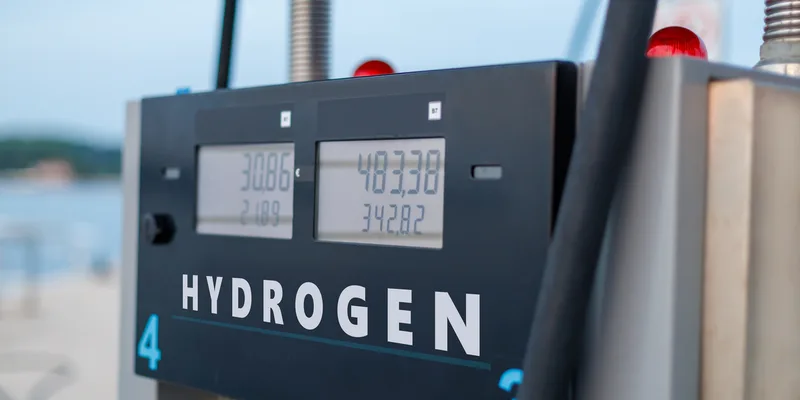
- Insufficient hydrogen supply (most frequent)
- Partial fills only (1/5 to 7/8 tank, requiring multiple transactions)
- Extended maintenance outages (weeks to months)
- Pre-cooling system failures
- Compressor malfunctions
- Nozzle freezing (hydrogen at -40°C literally freezes to vehicles)
- Contaminated fuel (Torrance incident permanently destroyed 75 Mirais)
These reliability issues have driven many hydrogen vehicle owners to file lawsuits against manufacturers.
Shell's Exit and the Cascade of Closures
Shell's February 2024 California Exodus
- Closed 7 light-duty stations permanently (12% of state network)
- Locations shuttered: Berkeley, Citrus Heights, multiple San Francisco sites, two Sacramento stations, San Jose
- Official reason: "Hydrogen supply complications and other external market factors"
- Deeper truth: Shell cancelled plans for 48 new stations in September 2023, rejecting $40.5 million in California Energy Commission funding
The 2023-2024 Closure Wave
- True Zero: 10 stations closed (October 2023)
- Iwatani and Messer: Multiple stations shuttered (November-December 2023)
- Total damage: 12 stations closed vs. 9 opened in 2024 = net loss of 3 stations
Why Operators Are Fleeing
- Rising feedstock costs from Russia-Ukraine war
- LCFS credit values declined significantly below $100/metric ton (down from $200+)
- Actual demand far below projections
- Supply chain disruptions at production facilities
- Unforeseen operating costs making profitability impossible even with massive subsidies
How Hydrogen Refueling Actually Works
The 11-Step Process
- Park vehicle, turn off power, position fuel door toward dispenser
- Open fuel filler door, remove dust cap
- Insert payment card
- Verify dispenser pressure rating (H70/700 bar for passenger vehicles)
- Lift nozzle, pull blue collar past yellow stripe
- Insert nozzle firmly into vehicle port
- Select pressure grade
- Dispenser automatically fills using SAE J2601 protocol
- Infrared communication between nozzle and vehicle controls fill rate
- Auto-shutoff when complete or at temperature/pressure limits
- Remove nozzle (may require waiting if frozen, then forceful pull)
Advertised time: 3-5 minutes. Real-world reality: Highly variable. Best case matches the promise. Common experience: 5-10 minutes with partial fills. Worst case: Over one hour dealing with frozen nozzles, low pressure, or system errors.
The Technology Behind the Stations
Pressure Systems
- H70 (700 bar/10,000 psi): Passenger vehicles requiring pre-cooling to -40°C, typical fill 4-5 kg providing ~400 miles range
- H35 (350 bar/5,000 psi): Heavy-duty applications, usually no active cooling needed, fills 20-40 kg for buses/trucks
Station Architecture
- Multi-stage reciprocating compressors (lubricated or oil-free)
- 3-bank cascade storage system: Low (350 bar), Medium (500 bar), High (900+ bar)
- Pre-cooling heat exchangers for 700-bar dispensing
- Mass flow meters, temperature sensors, pressure controls
- Storage capacity ranges: Small (50-300 kg/day), Medium (300-1,200 kg/day), Large (1,000-4,000 kg/day)
Station Costs Are Astronomical
- Basic station: $1.5-2.5 million
- With site prep and permitting: $3-4 million
- On-site hydrogen production: Add $2+ million
- Annual operating costs: $150,000-300,000
These astronomical costs contribute directly to the high hydrogen fuel prices consumers face at the pump.
Real Owner Experiences and Feedback
"Not in my wildest dreams or nightmares would I expect a purchase from a giant car company like Toyota would turn out to be such a terrible experience. The entire H2 vehicle experience is an experiment that is failing." —Shawn Hall, Mirai owner
"There [is] no longer any hydrogen fuel available in San Francisco where I live. Toyota continues to sell this vehicle. How is this acceptable?" —Shawn Hall
"[T]he user experience of owning a hydrogen car is, to put it mildly, not so good... the state of H2 refueling in California is, in a word, abysmal." —California State Senator Josh Newman (Mirai owner)
MotorTrend's Yearlong Reality Check
- Only managed 13,882 miles in full year (infrastructure limitations)
- Average 331 miles per tank vs. 402 advertised
- Constant station status checking required using tools like our hydrogen station finder
- Hose freezing to vehicle common, requiring "wait and healthy yank"
- Road trip anxiety: "If a hydrogen station isn't working, there won't be another one just down the block"
High Fuel Costs Impacting Owners
- 2021 hydrogen cost: $13.14/kg
- Late 2022: $21.28/kg
- 2024-2025: $32-36/kg at most stations
- Full Mirai tank (5.6 kg): $180-200 per fill-up
- Cost per mile: $0.78 (vs. $0.07 for home EV charging)
Significant Depreciation Concerns
Mirai owners report 90% value drops. Vehicles purchased for $50,000-67,000 now sell used for $8,000-15,000. Over 234 used Mirais listed on Carfax, half with under 40,000 miles—owners are fleeing.
The Cost Comparison: Hydrogen vs. EV Infrastructure
Hydrogen Stations
- Build cost: $1.5-4 million each
- Annual operating: $150,000-300,000
- Daily capacity: 200-1,000 kg
- Vehicles served: 40-200 per day
EV Fast Charging
- DC Fast Charger (50-150 kW): $30,000-150,000
- 350 kW ultra-fast unit: ~$200,000
- Operating costs: Electricity plus minimal maintenance
- Can install 10-20 Level 2 chargers for one hydrogen station's cost
The Infrastructure Investment Gap
- Estimated cost for US hydrogen parity (53,000 stations): $58 trillion
- Federal NEVI EV program (500,000 chargers): $7.5 billion
- Ratio: 8,000:1 cost advantage for EV infrastructure
Station Locator Tools and Their Limitations
Primary Resources
- Hydrogen Fuel Finder: Our station locator with DOE data integration
- California Fuel Cell Partnership (CAFCP) Station Map: Real-time Station Operational Status System with color codes
- DOE Alternative Fuels Data Center: Official federal database covering all US stations
- Vehicle-integrated apps: Toyota Mirai station finder, Hyundai BlueLink for Nexo
Critical limitation: Real-time status often inaccurate. Owners report arriving at "online" stations to find them offline.
The Death of Hydrogen's Promise
The Infrastructure Comparison Tells the Story
| Metric | Hydrogen | EV Charging | Ratio |
|---|---|---|---|
| US Stations | 52 | 80,940 | 1:1,560 |
| California Stations | 50 | 44,000+ | 1:880 |
| 2024 Growth | -3 (negative) | +16% | N/A |
| Build Cost | $1.5-4M | $2K-200K | 20-2,000x |
Market Adoption Reality
- 2023 California: 318,000 BEVs sold vs. 3,143 FCEVs (101:1 ratio)
- 2024 US: 1.3 million EVs vs. 499 hydrogen vehicles (2,606:1 ratio)
- Hydrogen represents 0.7% of California zero-emission vehicle sales
The verdict: U.S. hydrogen refueling infrastructure is currently contracting rather than expanding. With Shell's exit, station closures exceeding new openings, and significant operational challenges reported by users, the hydrogen passenger vehicle market faces substantial headwinds. The infrastructure investment required would be considerably higher than EV charging infrastructure while serving a currently limited market. These challenges explain why hydrogen vehicle adoption remains concentrated in California with minimal penetration in other states.
Find Hydrogen Stations Near You
Use our free hydrogen fuel station locator to check real-time availability and see the limited network for yourself.
Open Station Locator
