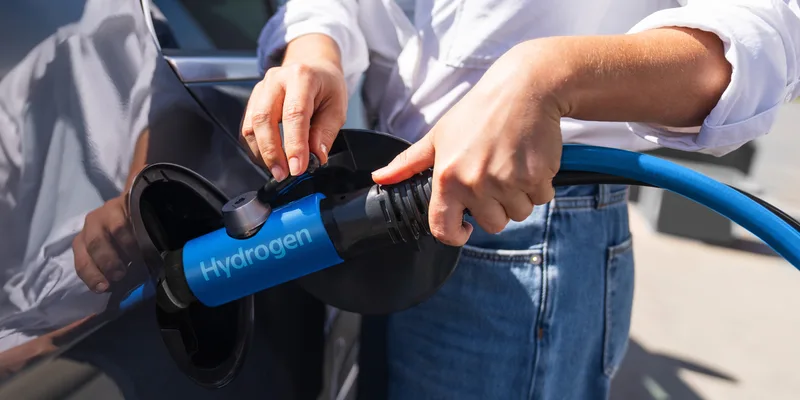
Filling a Toyota Mirai costs $175-200 in California as of early 2025. That buys 250-300 miles of driving—enough range to reach San Francisco from Los Angeles before needing another fill-up. At $0.60-0.67 per mile, hydrogen is notably more expensive than premium gasoline in larger vehicles and significantly more expensive than electricity for battery electric vehicles at $0.03-0.05 per mile from home charging.
Hydrogen vehicle owners invested in advanced environmental technology, but face higher operating costs than initially anticipated. Understanding actual fuel costs using tools like our hydrogen station locator and tracking manufacturer fuel credit usage are important considerations for current and prospective owners.
Current Pump Prices in California
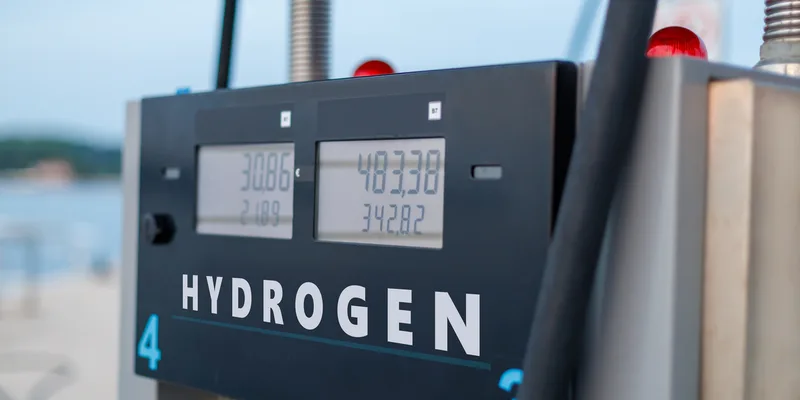
California's retail hydrogen prices reached $34-36 per kilogram at most stations in late 2024 and early 2025, with TrueZero—the state's largest operator running 37 stations—charging $36/kg across its network. Iwatani and Air Products stations offered slightly lower prices at $29.96-29.99/kg, though availability at these stations fluctuates due to supply issues and equipment failures.
These prices represent a significant increase from historical averages. From 2014 through 2021, California hydrogen typically cost $13-16/kg. That's a 119% increase in three years—nearly tripling during a period when industry projections anticipated declining costs.
Global Comparisons Reveal California's Astronomical Prices
- California: $34-36/kg (most expensive globally)
- Japan: $10.67/kg
- South Korea: $8-12/kg with government subsidies
- Germany: ~€15.75/kg (roughly $16.76)
- Washington State: $4/kg—one-ninth of California's price
On an energy-equivalent basis, $36 per kilogram equals approximately $14.60 per gallon of gasoline. California's gasoline prices hover around $4-5/gallon. Hydrogen costs three times as much per gallon-equivalent.
Breaking Down Costs Per Mile and Per Tank
Understanding hydrogen costs requires translating per-kilogram prices into the per-mile and per-tank numbers that match how drivers actually experience fuel costs. The math reveals why hydrogen vehicle owners feel shocked every time they refuel.
Toyota Mirai
- Tank capacity: 5.6 kg hydrogen
- Full tank cost at $36/kg: $201.60
- EPA range: 402 miles (XLE) / 357 miles (Limited)
- Real-world range: 250-300 miles under mixed driving
- Cost per mile: $0.67-0.80
For more details on Toyota Mirai specifications and pricing, see our complete buyer's guide.
Hyundai Nexo
- Tank capacity: 6.3 kg hydrogen
- Full tank cost at $36/kg: $226.80
- EPA range: 380 miles (Blue) / 354 miles (Limited)
- Real-world range: 300-350 miles
- Cost per mile: $0.65-0.75
Honda CR-V e:FCEV
- Tank capacity: 4.3 kg hydrogen
- Full tank cost at $36/kg: $154.80
- Hydrogen-only range: 270 miles
- Battery range: 29 miles
- Total range: 299 miles
- Cost per mile (combined): $0.52
Historical perspective: At the $16/kg pricing common in 2022, a Mirai fill-up cost $89.60, yielding $0.30-0.35 per mile—roughly matching premium gasoline costs. The $111 increase in fill-up costs from 2022 to 2025 represents a 125% surge.
How Hydrogen Compares to Other Fuels
Placing hydrogen costs in context against gasoline, diesel, and electric charging reveals just how expensive the "fuel of the future" has become relative to every alternative.
Gasoline Vehicles
- Typical sedan (30 MPG): $0.15/mile at $4.50/gallon
- Toyota Camry hybrid (44 MPG): $0.10/mile
- Premium fuel luxury sedan (25 MPG): $0.20/mile at $5/gallon
- Ford F-150 pickup (18 MPG): $0.25/mile
The Mirai at $0.67/mile costs 4.5 times more than a regular sedan and even 40% more than a gas-guzzling pickup truck.
Electric Vehicle Charging
- Home charging (national average $0.17/kWh): $0.05/mile
- California home charging ($0.27-0.32/kWh): $0.08-0.10/mile
- Time-of-use overnight rates: $0.03-0.05/mile
- DC fast charging ($0.43-0.54/kWh): $0.13-0.16/mile
Hydrogen at $0.67/mile costs 13 times more than EV home charging. For a comprehensive comparison, see our hydrogen vs electric vehicles guide.
Annual Fuel Cost for 12,000 Miles
- Gasoline vehicle (30 MPG): $1,800/year
- Hybrid vehicle (44 MPG): $1,227/year
- EV home charging: $360-600/year
- Hydrogen vehicle: $7,200-8,040/year
That hydrogen vehicle costs $6,600-7,440 more in fuel annually than an EV, and $5,400-6,240 more than a gasoline vehicle.

Manufacturer Fuel Credits Provide Temporary Relief
All three hydrogen vehicle manufacturers recognize that current fuel prices kill sales, so generous fuel credits come standard with purchase or lease. These credits provide temporary relief but create deceptive economics that obscure true ownership costs.
Toyota Mirai & Hyundai Nexo: $15,000 Fuel Credit
- Purchase: $15,000 credit for up to 6 years
- Lease: $15,000 credit for up to 3 years
- Advertised duration: "At least five to six years of driving"
- Reality at $36/kg: Buys 416 kg = 18,700-20,800 miles = 18-21 months
After credit exhaustion, owners face full retail hydrogen costs of approximately $7,500 per year for 12,000 miles. Over six years: roughly zero fuel costs for years 1-2, then $7,500 annually for years 3-6. Total six-year fuel costs reach $30,000 versus $2,160-3,600 for an EV.
Honda CR-V e:FCEV: $15,000-$30,000 Credit
- 3-year/36,000-mile lease: $15,000 ($459/month)
- 6-year/72,000-mile lease: $30,000 ($389/month)
- 2-year lease: $25,000
The fuel credit illusion creates buyer deception claims. Toyota's class action lawsuit alleges fraudulent misrepresentation partly because the advertised "five to six years" of free fuel depletes in under two years at current prices.
Why Hydrogen Costs So Much: The Infrastructure Economics Nightmare
Hydrogen's extraordinary pump price doesn't result from expensive production alone. The majority of retail cost comes from compression, storage, and distribution—the midstream infrastructure costs that physics and economics make unavoidably expensive at small scale.
Production: Only 15-20% of Retail Price
Current U.S. hydrogen production uses primarily steam methane reforming of natural gas, costing $1.50-2.50 per kilogram at the production gate. Even green hydrogen via renewable electrolysis costs $4-6/kg in favorable regions. If production were the only cost, hydrogen could retail competitively with gasoline.
Compression: 50% of Retail Cost
Hydrogen must be compressed from production pressure to 10,000 PSI for vehicle tank storage. This compression requires enormous energy—consuming 10-30% of the hydrogen's energy content—and expensive equipment.
- Compression capital costs: $1 million+ per station
- Energy costs for compression: $3-6/kg
- Maintenance: 18% of compression system costs annually (vs. projected 3-5%)
Distribution & Transportation: 30-35% of Retail Cost
Most California stations receive hydrogen via gaseous tube trailer trucks. Each truck holds limited hydrogen, typically 300-500 kilograms. A single diesel truck delivering 9,000 gallons of gasoline supplies a gas station for days. A tube trailer delivers enough hydrogen for perhaps 50-80 vehicle fill-ups—maybe two days of sales at a busy station.
Station Capital Costs: $2-3.2 Million
- Basic gaseous-delivery station: $2 million+
- Liquid-delivery or on-site electrolysis: $2.8-3.2 million
- Compare to gasoline station: $250,000-500,000
Economic viability requires scale that doesn't exist. Industry analysis suggests hydrogen stations need approximately $40 million in lifetime throughput to achieve break-even economics. California has roughly 18,000 hydrogen vehicles supporting 54 operational stations. That's 333 vehicles per station on average—not nearly enough to achieve profitability.
What the Future Holds for Hydrogen Prices
Projections for hydrogen costs depend heavily on which analyst you ask and which scenario assumptions they make. Optimistic forecasts show costs falling toward $1-2/kg by 2050. Pessimistic analyses suggest prices remaining above $3/kg excluding distribution costs.
Department of Energy "Hydrogen Shot"
The DOE's initiative targets $1/kg production cost by 2031. Most analysts project $2-3/kg production costs for green hydrogen by 2030 in favorable regions with abundant renewable energy.
The problem: Even achieving $2/kg production costs doesn't solve the retail price problem. Compression, storage, and distribution add $5-10/kg to retail pricing with current infrastructure.
Realistic 2030 Scenario
$15-20/kg retail pricing even with optimistic production cost declines. This assumes $2-3/kg production, $5-8/kg compression and distribution, and station margins of $3-5/kg. This pricing would still cost 3-4 times more per mile than gasoline and 10-12 times more than EV home charging.
For hydrogen to achieve cost parity with gasoline on a per-mile basis, retail pricing must fall to approximately $10/kg. Matching EV home charging costs requires hydrogen at $1.50-2.50/kg—below even optimistic production costs before adding compression and distribution.
Real-World Examples Illuminate the Cost Pain
Bay Area Mirai Owner's Budget
Monthly driving of 1,100 miles (typical for Bay Area commuters) consumes approximately 22-24 kilograms of hydrogen. At $36/kg, that's $792-864 in monthly fuel costs.
For comparison:
- Toyota Camry hybrid: $112 monthly
- Tesla Model 3 (home charging): $33-44 monthly
The Mirai owner pays $750-820 more monthly than the EV alternative, or $9,000-9,840 more annually.
Southern California Nexo Owner
Driving 16,000 miles annually consumes roughly 145-160 kilograms. At $36/kg, that's $5,220-5,760 in annual fuel costs. The $15,000 credit lasted 26 months before exhausting. The owner now faces 46 months (3.8 years) of fuel costs totaling $19,840-21,888.
"The car is amazing—quiet, comfortable, lots of technology. But the fuel costs have been challenging to manage. I spend $450-500 monthly on hydrogen when my neighbor spends $50 charging his Tesla. I'm spending more on fuel than my car payment."
Sacramento Area Mirai Owner
Sacramento now has only one operational hydrogen station following closures. This owner regularly drives 80-90 miles roundtrip to reach the nearest reliable station, consuming hydrogen just to refuel.
"I bought the car because Toyota promoted a growing network and included fuel credits. The network has faced challenges and the fuel credit lasted one year. Resale values have been disappointing, with the car worth significantly less than the original purchase price. The high cost per fill-up at $180 has been harder to manage than expected."
Conclusion: Understanding the Full Cost Picture
Hydrogen fuel costs in 2025 present significant challenges for passenger vehicle adoption. At $32-36/kg in California—currently the primary market with hydrogen infrastructure—operating costs substantially exceed both gasoline and electric vehicle options, with hydrogen reaching 12-15 times the cost of electric vehicle home charging.
The $0.60-0.67 per mile real-world cost translates to $7,200-8,000 annually for typical driving, compared to $360-600 for EVs or $1,800 for gasoline vehicles. Over a typical six-year ownership period, the cost differential can reach $40,000 compared to electric alternatives.
These cost dynamics are reflected in market adoption: 322 hydrogen vehicles were sold in the first half of 2024 versus 1.3 million EVs. Manufacturers are offering substantial purchase incentives—Toyota provides up to $43,000 in discounts—to help offset these ongoing operational cost concerns.
For buyers considering hydrogen vehicles in 2025, it's important to carefully evaluate the full cost picture: current fuel costs are higher per mile than many gasoline vehicles and substantially higher than home-charged electric vehicles. Manufacturer fuel credits can help offset these costs initially, but should be factored into long-term ownership calculations. Learn more about your options in our complete hydrogen vehicle buyer's guide.
Check Hydrogen Station Prices in Your Area
Use our free hydrogen fuel station locator to find current pricing and availability at stations near you.
Find Hydrogen Stations